







Search Results for: Guarumo Estate

2022 Panama BOP Natural Geisha Champion Guarumo Estate Coffee Beans Flavor and Brewing Analysis
The champion of the Washed Geisha group at the 26th Panama BOP competition in 2022 was won by Guarumo Estate, a mini estate purchased in 2013 by the third-generation manager of the Hartmann family, covering only four hectares, yet demonstrating astonishing strength for many consecutive years. The 2022 new-crop sun-dried Geisha obtained by Front Street Coffee, though not the competition batch, likewise carries the estate's high-altitude terroir and light-roast craftsmanship. This article will guide you through the historical origins of Guarumo Estate and the Hartmann family's coffee lineage, and provide a detailed breakdown of this champion bean's flavor performance and brewing parameters, from grind size and water temperature to the three-stage pouring technique, fully presenting its layers of mango, pineapple, white floral fragrance, and malt-fermented sweetness. [more…]
2022 BOP Natural Geisha Group Champion GuaGuoGuo Estate Coffee Bean Flavor Analysis and Pour-Over Parameter Guide
The results of the 26th Best of Panama (BOP) green bean competition in 2022 have been announced. The champion of the Washed Geisha category was won by Aurora Estate, while the crown in the Natural Geisha category went to Guarumo Estate under the Hartmann family. Front Street Coffee had already acquired the 2022 harvest Guarumo Estate Natural Geisha coffee beans before the competition. This article will take you into a deeper understanding of the estate's historical origins, cultivation philosophy, and the flavor performance and brewing suggestions of this champion-level Geisha. From the Hartmann family's story of European immigration, to Guarumo Estate's impressive results in the BOP competition for two consecutive years, and then to Front Street Coffee's light-roast strategy and pour-over parameters, this article will help you understand the complete picture of this charming Natural Geisha. [more…]
Complete Guide to Geisha Coffee Flavor: Taste Profiles and Brewing Guide for Geisha from Panama's Elida and Other Famous Estates
Geisha coffee is hailed as the crown jewel of specialty coffee, and its distinctive floral aroma and citrus acidity have captivated countless coffee lovers. This article will guide you through the origins and spread of Geisha coffee, analyze its flavor characteristics, and focus on introducing three distinctive Geisha coffee beans: Panama's Elida Estate, Sofia Estate, and Guarumo Estate. Front Street Coffee will also share brewing recommendations specifically for Panamanian Geisha, including coffee-to-water ratio, water temperature, grind size, and a three-pour technique, helping you fully showcase Geisha coffee's rich layering and delicate flavors at home. [more…]

Wenzhou Market Sees New Coffee-Marinated Egg Trend: Hot Americano as Broth, Some Even Use Geisha Specialty Beans to Cook
It's not unusual to see tea eggs sold at roadside stalls, but have you ever heard of eggs braised in coffee? Recently, a creative snack called "coffee eggs" appeared at the Qingdeng Market in Wenzhou. The vendor simmered coffee powder together with five-spice braising ingredients, then soaked the eggs in a hot Americano broth to absorb the flavor, selling each for 5 yuan. This move quickly sparked heated discussion online, with some worrying about a bitter taste, others questioning hygiene, and coffee enthusiasts even joining in the experiments, using Panama Guarumo Washed Geisha that costs 2,000 yuan per kilogram to boil eggs, with the coffee alone costing over a hundred yuan. When everyday ingredients meet specialty coffee, what kind of taste experience will it create? Front Street Coffee takes everyone to find out. [more…]
Arabica, Robusta, and Liberica: Differences Among the Three Major Coffee Species and an Analysis of the Beans Used by Luckin
Coffee enthusiasts who move from chain brands into independent cafés often develop a strong interest in coffee varieties. This article systematically sorts through the appearance, flavor performance, and growing background of the three major coffee varieties—Arabica, Robusta, and Liberica—answers why chain brands such as Luckin prefer Arabica, and introduces representative products on the Front Street Coffee bean list, including Geisha and commercial blends. Whether you are a beginner just starting out or a seasoned veteran, you can gain a complete understanding of coffee varieties from it. [more…]
An Analysis of Panama's Specialty Coffee Regions and Processing Methods: Boquete Geisha Knowledge and Pour-Over Parameter Sharing
Although Panama is not the country with the longest history of coffee cultivation, it has become a dazzling star in the specialty coffee world thanks to its unique terroir and meticulous management. On Front Street Coffee's bean list, Panamanian coffee occupies a prominent place, from affordable prices to Geisha costing hundreds of yuan, attracting the attention of many coffee lovers. This article will take you through the development history of Panamanian coffee, the distribution of its main producing regions, the Best of Panama (BOP) competition, as well as the flavor characteristics and brewing key points of Geisha coffee, and share the complete pour-over steps for Front Street's Boquete region washed Geisha. [more…]
Exploring Panama's Volcán Region: A Comprehensive Analysis of Hacienda La Esmeralda Geisha Coffee Beans
Panama, with its unique geography and microclimates, has become synonymous with top-tier Geisha coffee. Beyond the well-known Boquete region, the Volcán region west of Barú Volcano has also been making frequent appearances in BOP competitions in recent years, and Hacienda Hartmann is a coffee-growing pioneer on this land. This article will guide you through Panama's coffee-growing regions and terroir, the Hartmann family's historical legacy, and the detailed flavor and brewing performance of the Hartmann Estate Geisha coffee beans offered by Front Street Coffee, providing coffee enthusiasts with a complete reference on the region and tasting. [more…]
Panama Volcán Region Hartmann Estate: A Comprehensive Analysis of Its History, Cultivation Characteristics, and Subsidiary Estates
In Panama's Volcán region, besides star estates like Hacienda La Esmeralda, there is also the historically significant Finca Hartmann, renowned for its ecological conservation. Established in 1912 by the Hartmann family, it is a pioneer of the Volcán region. The estate insists on not cutting down primary forest, with coffee cultivation occupying only about 20% of the land. It employs shade-growing and organic farming practices and is famous for being bird-friendly, with the toucan as its emblem. Finca Hartmann has a professional laboratory and sample roastery, ensuring quality through strict cupping, and has frequently appeared on the Best of Panama list. Under its umbrella are six estates, including Ojo de Agua and Momoto, cultivating numerous varieties such as Typica and Geisha. Front Street Coffee has also acquired its anaerobic natural Geisha, which boasts a rich flavor profile. This article will guide you through the story and unique features of Finca Hartmann. [more…]
Panama Sophia Estate Geisha Coffee Bean Analysis: BOP Championship Journey and Roasting & Brewing Recommendations
Sophia Estate is one of the highest-altitude Geisha plantations in Panama, founded by Willem Boot in 2008. Having endured extreme environmental and climatic challenges, it ultimately won the BOP competition twice. This article will guide you through the development history of Sophia Estate, the flavor characteristics of its Geisha coffee, and Front Street Coffee's roasting approach and brewing parameters for this natural Geisha, providing coffee enthusiasts with a complete reference from origin to cup. [more…]
A Complete Analysis of Panama Volcán Hartmann Estate Geisha Coffee Beans: From Terroir to Cup Profile
Panamanian coffee has gained international fame in the specialty coffee world thanks to the Geisha variety, and the Volcan region, as one of the country's three major producing areas, has performed impressively in BOP competitions in recent years. Hartmann Estate is rooted in the western part of the Baru Volcano. Since its establishment in 1912, it has consistently upheld the philosophy of balancing primary forest conservation with coffee cultivation, becoming a pioneering representative of the Volcan region. The estate cultivates multiple varieties, including Geisha, among which Geisha is highly sought after for its delicate floral aroma and rich fruit acidity. The Hartmann Estate Geisha that Front Street Coffee has acquired this time uses anaerobic natural processing and a medium-light roast. After brewing, it presents white floral notes and multi-layered fruit tones, with a silky mouthfeel like Earl Grey tea and a lasting sweet finish. This article will give you a comprehensive understanding of the terroir of Panama's coffee-producing regions, the characteristics of the Volcan region, the history and evolution of Hartmann Estate, and the past and present of the Geisha variety. [more…]
Panama Geisha Coffee Flavor Analysis: Variety Origins, Regional Characteristics, and Pour-Over Parameter Essentials
Geisha coffee is now regarded by many enthusiasts as synonymous with top-tier coffee, and Panama's Hacienda La Esmeralda is the most iconic classic producing region among them. This article begins with the historical origins of the Geisha variety, tracing how it went from wild seeds in Ethiopia, through Kenya and Costa Rica, and finally shone brilliantly in Panama. It also analyzes the source of Geisha coffee's unique floral, berry, and honey flavors, as well as the influence of terroir on taste. At the end, it includes the complete pour-over parameters and three-stage pouring steps for Front Street Coffee's Hacienda La Esmeralda Red Label Geisha, for coffee enthusiasts to reference and practice. [more…]
A Complete Analysis of Panama Hacienda La Esmeralda Geisha Coffee Bean Brand Grades: A Detailed Explanation of the Differences Between Red Label, Green Label, and Blue Label
Geisha coffee is now incredibly sought after in the specialty coffee world, and Panama's Hacienda La Esmeralda played an indispensable role in this variety gaining world-class renown. From Daniel discovering Geisha's unique flavor on the cupping table in 2003 to its championship win at the Specialty Coffee Association of America competition in 2005, Hacienda La Esmeralda proved Geisha's extraordinary potential through quality. The estate divides its growing plots by altitude into three brand series—Red Label, Green Label, and Blue Label—each representing different quality grades and price positioning. This article will systematically sort out the distinguishing criteria, flavor characteristics, and purchasing points for these three brands, while also introducing specific information on several Hacienda La Esmeralda Geisha products under Front Street Coffee, helping coffee enthusiasts clearly understand the differences between each grade. [more…]
The Origin and History of Geisha Coffee | What Are the Characteristics of the Panamanian Geisha Variety? Which Famous Coffee Estates Grow Geisha? What Should You Pay Attention to When Hand-Brewing Geisha Coffee?
People's definition of top-tier coffee is constantly changing, and the old rich, full-bodied cup has long become a thing of the past. Nowadays, if you casually ask any coffee lover which coffee can represent the very best, the answer you get is very likely Panama Geisha. There are many varieties of Panama Geisha, and when faced with Front Street's tasting [more…]
Tracing the Origins of Geisha Coffee Beans: From Ethiopia to Panama, Is It Really an Arabica Variety?
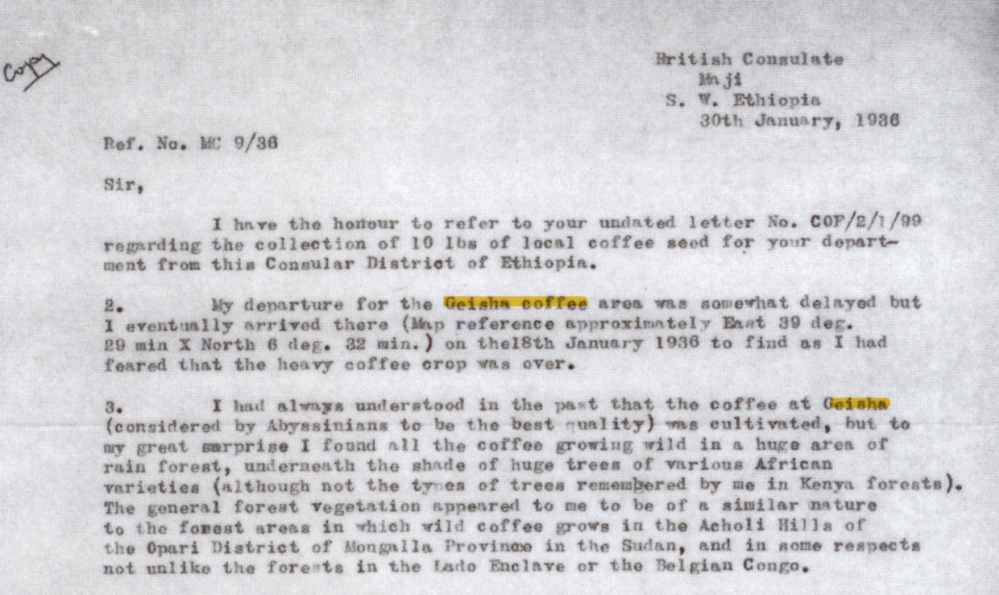
Is Geisha coffee bean an Arabica variety? What variety does the Panamanian Geisha coffee tree originate from? These are questions many coffee enthusiasts often have when encountering Geisha. In fact, Geisha is precisely a precious variety under the Arabica species, and its legendary journey began in Ethiopia in the 1930s, then passed through Kenya and Tanzania to Costa Rica, and finally shone brilliantly in Panama. Front Street Coffee, through numerous cupping sessions, has had its understanding repeatedly refreshed by Geisha's fresh floral aroma, rich fruity notes, and refreshing tea-like body. This article will comprehensively sort out Geisha's varietal classification, historical transmission path, flavor characteristics, and how Hacienda La Esmeralda pushed it to the throne of top-tier coffee, while also sharing Front Street's recommended Panama Hacienda La Esmeralda Red Label Geisha and its brewing suggestions. [more…]
Ethiopia Gesha Village vs. Panama Geisha: A Full Analysis of Variety Origins, Flavor Differences, and Brewing Comparison
Geisha coffee has won over countless coffee lovers with its floral aromas and fruity notes, but you may not know that although the Geisha from Gesha Village in Ethiopia and the Geisha from Hacienda La Esmeralda in Panama share the same name, their flavors are quite different. This article begins with the historical migration of the Geisha variety, tracing its complete journey from the forests of Ethiopia to Kenya, Costa Rica, and finally to Panama, where it rose to fame, and compares the differences between the Red Label from Gesha Village in Ethiopia and the Red Label from Hacienda La Esmeralda in Panama in terms of origin, variety, processing method, and cupping performance. Front Street Coffee will also share a medium-light roast approach and Hario V60 brewing parameters, helping you understand why these two Geishas each have their own strengths, and how genetic differences create such distinctly different flavor directions. [more…]
Panama Hacienda La Esmeralda Geisha Coffee Flavor Analysis: Processing Method Characteristics and Moka Pot Brewing Techniques
Geisha coffee is hailed as the king of specialty coffee, and Panama's Hacienda La Esmeralda is undoubtedly the key force that pushed it to the pinnacle. From the perspective of Front Street Coffee, this article systematically sorts out Hacienda La Esmeralda's Geisha grading system—the definitions and flavor characteristics of Red Label, Green Label, and Blue Label respectively—and provides an in-depth analysis of Geisha coffee's performance in a moka pot. Whether you want to learn about Hacienda La Esmeralda's traceability information and cupping score standards, or want to try making a cup of Geisha latte with a moka pot, this article will provide you with detailed reference. Follow in Front Street's footsteps and explore the unique charm and practical brewing techniques of Geisha coffee together. [more…]
Why does Geisha coffee dominate the specialty coffee world? A full breakdown from Hacienda La Esmeralda grading to moka pot brewing
In the world of specialty coffee, Geisha is undoubtedly the most dazzling variety, appearing frequently in various brewing competitions and often even unanimously chosen by contestants. What exactly is its charm that makes people willing to pay such a high price for it? Today, Front Street Coffee will start with the origin of Geisha, focusing on how Panama's Hacienda La Esmeralda pushed this variety to the altar, as well as the grading logic and respective characteristics of Red Label, Green Label, and Blue Label. In addition, we will also brew a cup of Esmeralda Red Label Geisha with a moka pot to see how this top-tier bean performs in a latte, and share the key details and precautions in operating a moka pot. [more…]
How to distinguish Hacienda La Esmeralda Geisha Red Label, Green Label, and Blue Label? A practical guide to pour-over parameters and coffee-to-water ratios
Geisha coffee is a star in today's specialty coffee world, and Hacienda La Esmeralda is the driving force that brought this variety into the spotlight. Based on altitude and cupping performance, the estate classifies Geisha into three grades: Red Label, Green Label, and Blue Label, and many coffee enthusiasts are curious about the differences in flavor and positioning among the three. From the perspective of Front Street, this article sorts out the terroir of Panama's Boquete producing region, the development history of Hacienda La Esmeralda, and the origins and characteristics of the Red, Green, and Blue Labels, while also including pour-over recommendations specifically for Geisha, including parameters such as a V60 dripper, 92-93°C water temperature, and a 1:15 coffee-to-water ratio, to help you brew Geisha's signature floral aroma and fruity acidity at home. [more…]
A Complete Guide to Hacienda La Esmeralda Geisha Coffee Beans: Flavor Differences Between Red, Green, and Blue Labels and Front Street Brewing Tips
Friends who often drink Geisha at Front Street Coffee frequently ask: what exactly are the flavor differences between Hacienda La Esmeralda's Red Label and Green Label? To truly understand Geisha, one must start with Hacienda La Esmeralda—it is both the discoverer and the promoter of Geisha's flavor. This article will guide you through the geographical advantages of Panama's Boquete region, the history of the Geisha variety's spread, and how Hacienda La Esmeralda turned a windbreak tree species into a star of the coffee world. It focuses on breaking down the definitions, altitude requirements, processing methods, and flavor characteristics of Red Label, Green Label, and Blue Label, and includes Front Street Coffee's actual photos and brewing parameters for Red Label and Green Label Geisha, helping you choose and taste more clearly. [more…]
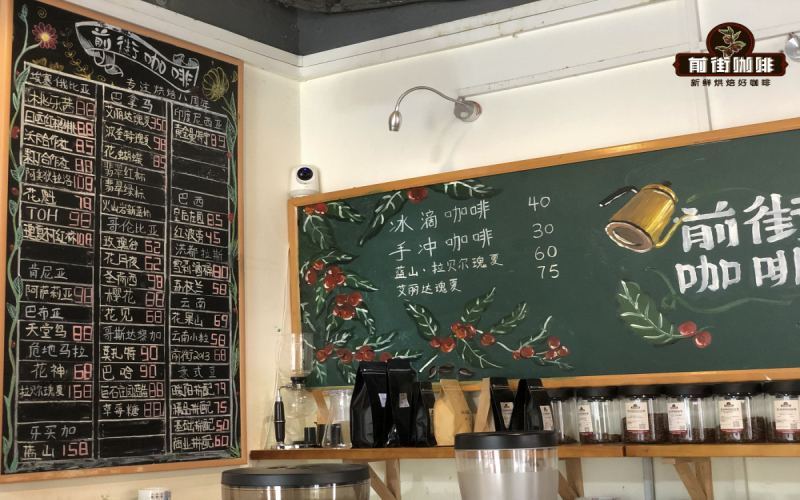
A Complete Guide to Panama Geisha Coffee: Variety Origins, Growing Conditions, Market Prices, and Flavor Brewing Guide
Geisha coffee holds a unique and exalted position in the specialty coffee world, with its price consistently ranking at the top of the menu. From the perspective of Front Street, this article systematically traces Geisha's varietal origins and rise to fame, analyzing the deep-seated reasons behind its high price, including its stringent requirements for growing conditions such as altitude, soil, and shade, as well as varietal characteristics like thin leaves, weak root systems, and low yields. It also introduces the Best of Panama (BOP) competition and Hacienda La Esmeralda's grading system, details the flavor differences between washed and natural processing methods, and offers red label, green label, and affordable alternative options from Front Street's bean list. Finally, it includes brewing parameters and flavor descriptions for the washed green label, helping enthusiasts fully understand Geisha's value and charm. [more…]